
With such announcements grabbing the voters' attention, critical issues like pollution, especially the smog that chokes Delhi every winter, remain largely unaddressed. Many residents have raised concerns over the lack of concrete action plans to combat air pollution, which continues to pose a severe health risk to Delhiites.

Share your unforgettable experience with us at getahead@rediff.co.in.

TejasAsia has made its mission to transform the lives of the underprivileged children, youth, destitute women and others.

The Delhi Disaster Management Authority in its order on October 29 allowed Chhath celebrations at "designated sites" barring the banks of the Yamuna.

Every river is a living person, argues Gopal Krishna on the basis of the recent Uttarakhand HC verdict.

The expert panel has suggested that there would be two components of rehabilitation plan -- physical and biological, and they would cost Rs 28.73 crore and Rs l3.29 crore respectively, besides additional ancillary expenses.
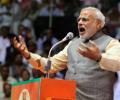
Prime Minister Narendra Modi launched a scathing attack on AAP chief Arvind Kejriwal in a rally in Delhi, comparing him to notorious criminal Charles Sobhraj and accusing him of spreading lies about the BJP government in Haryana mixing poison in the Yamuna river. Modi said Kejriwal's claims are an insult to India and that the AAP is desperate due to the fear of defeat in the upcoming Delhi elections. He also highlighted the BJP's track record of fulfilling promises and urged people to give him a chance to serve them. The attack comes as the Delhi election campaign heats up, with the AAP and BJP locked in a tight race.
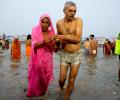
The glimpses of the "Maha Kumbh Mela", or the Great Pitcher Festival, in Prayagraj, January 13, 2025.
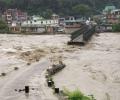
All educational institutions in Shimla and Kullu districts will remain closed on Monday as heavy to extremely heavy rains continue to lash the state, district officials said.

'Does the government help ordinary citizens like you and me with our marriages, birthdays and anniversaries?' Rashme Sehgal reports on the controversy over the the Art Of Living Foundation's plans for a cultural festival on the Yamuna floodplains.

Union Minister for Water Resources Uma Bharati recently reiterated her commitment towards making the Yamuna Shuddikaran Abhiyan a success but said little else. It is obvious that in comparison to the Ganga about which she waxes eloquent at the drop of a hat, her treatment towards Yamuna can at best be described as step-motherly. Rashme Sehgal reports on efforts to save the river.
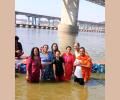
'It was as if the sacred waters were washing away not just my sins but also my doubts and burdens,' says Aayushi Agarwal.

Several bodies, decomposed, bloated and suspected to be of people who succumbed to COVID-19, were on Monday found floating in the river Ganga in a Bihar district.

The Supreme Court of India has directed the governments of Punjab and Haryana to cooperate with the Centre in finding an amicable solution to the long-standing dispute over the Sutlej-Yamuna Link (SYL) canal. The court deemed the de-notification of land acquired for the canal in Punjab an "act of high-handedness" and emphasized the need to consider "wider ramifications" beyond legal considerations. The court has set August 13 for a further hearing if an amicable solution is not reached.

According personhood to the Ganga and Yamuna is probably the best way to ensure the protection of natural resources, says Arundhuti Dasgupta.

'Till the BJP does not understand Kejriwal they cannot win Delhi.'

The Uttar Pradesh government is taking comprehensive measures to ensure the Ganga River is "dip-safe" during the Maha Kumbh, a massive religious gathering. This includes daily water testing, a 200-km temporary drainage system for greywater, and state-of-the-art technology to manage human waste. Authorities are also emphasizing the importance of keeping the river clean by removing pooja waste and encouraging the use of reusable items.

Officials have confirmed that water has been released from the Hathnikund Barrage in Haryana, contributing to the rise in river water levels.
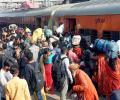
A senior railway official in Bihar was left stunned when a group of rural women claimed that they had been allowed to travel without tickets by Prime Minister Narendra Modi. The incident occurred at the Buxar railway station bordering Uttar Pradesh, where the official was inspecting the station due to the higher-than-expected rush of pilgrims visiting the Maha Kumbh. The official, Danapur Divisional Railway Manager Jayant Kumar, asked the women if they had tickets, and when they replied in the negative, he asked who told them they could travel without tickets. The women replied "Narendra Modi told us so," leaving the official speechless for a few seconds before he corrected them, stating that neither the prime minister nor any other authority had allowed this. The video of the conversation has gone viral on social media.

Kailash Gahlot, a key minister in the Aam Aadmi Party (AAP) government in Delhi, has resigned, potentially impacting the party's ambitious plan to roll out a Rs 1000 monthly honorarium scheme for women ahead of the Assembly polls in February. Gahlot, who represented the Jat-dominated Najafgarh constituency in West Delhi, cited several issues, including the "Sheeshmahal" controversy over his former official residence, the Delhi government's tussle with the Centre, and the failure to clean the Yamuna River, in his resignation letter. Delhi BJP leaders welcomed Gahlot's resignation, fueling speculation that he could join the party before the assembly polls. However, AAP leaders claimed Gahlot resigned due to pressure from central agencies, including the Enforcement Directorate, and that joining the BJP was his last option. Gahlot's resignation has sparked speculation about his future and the impact it will have on the AAP's electoral prospects.

Maha Kumbh Mela 2025 is more than just the largest gathering of humanity. It is a testament to faith and devotion.

Debutant legislator Rekha Gupta was sworn in as Delhi chief minister along with six ministers on Thursday in a grand show of strength full of colour and spectacle to mark the Bharatiya Janata Party's return to power in the city after more than 26 years.

Prayagraj is a must-visit place in 2025, but in January and February you can't miss the Maha Kumbh, a spectacular event like no other.
The NGT, however, refused to impose any further environment compensation on the AoL.

The Bharatiya Janata Party on Saturday returned to power in Delhi after more than 26 years to sweep away the Arvind Kejriwal-led Aam Aadmi Party with a two-thirds majority on the back of a hyper localised campaign and Prime Minister Narendra Modi's 'AAP-da'(disaster) blitzkrieg.

The cabinet of the new government led by Rekha Gupta balances representation of all major communities that propelled the Bharatiya Janata Party to power in Delhi with a massive majority after over 26 years.

The Northern Railways said it has cancelled around 17 trains and diverted around 12 others, while traffic has been suspended at four locations due to waterlogging.

The Uttar Pradesh government, citing a scientist, has asserted that Ganga water at the ongoing Maha Kumbh in Prayagraj is as pure as "alkaline water", debunking concerns raised by the Central Pollution Control Board (CPCB) about water quality. The government claims that a scientist found no bacterial growth or decline in the water's pH level, despite millions of devotees bathing in the river. However, experts caution that the quality of the Ganga water is not static and can vary greatly depending on various factors.

The Uttar Pradesh government has said that over 65 crore people visited the sacred site in Prayagraj since the Maha Kumbh began on January 13.

The Delhi Disaster Management Authority (DDMA) on Friday allowed Chhath Puja celebrations at designated sites in the city except the banks of Yamuna river.

Uttar Pradesh Chief Minister Yogi Adityanath visited Prayagraj to inspect the preparations for the Maha Kumbh 2025.

Police and PAC personnel have fished out 22 bodies so far while 10 others have been rescued, he said. A search was on to trace others.

... resulting in a Rs 2 trillion economic spinoff.

Despite high exposure to floods, Assam, Bihar, Uttar Pradesh, Odisha, and Sikkim are the best performing states in terms of flood early warning systems (EWS), according to the report by independent policy research think tank The Council on Energy Environment and Water.

Based on his '12 years of Yamuna activism', he hit out at people 'who believe' that the river can be revived by 'keeping it untouchable'.

The rhythmic sound of the oars hitting the water and the sight of countless pilgrims chanting along the riverbanks created an unforgettable atmosphere, says Varalaxmi Sompuri.
The court said the river has been polluted due to dumping of waste, its embankment had been encroached upon by jhuggis and places for religious worship which cannot be permitted.
Giving the "legal status" of living humans to the holy rivers, the court ordered that the Director, Namami Gange project for cleaning and rejuvenating the river

Only traces of rainfall were recorded in a few areas of the national capital on Thursday which continued to experience sultry weather.

Cracking the whip on those polluting Yamuna, the National Green Tribunal on Tuesday passed a slew of directions including a fine of Rs 5,000 on individuals spotted throwing waste or religious items in the river as it unveiled a plan for its restoration.
